Blog

Pressure and Massage Therapy
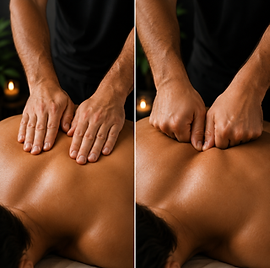
One of the biggest misconceptions in massage therapy is that “deeper” always means “better.”
Not always.
If the body feels threatened or overwhelmed by pressure, muscles often begin to guard and tighten in response. When this happens, the tissue may resist the work instead of benefiting from it.
Sometimes lighter or moderate pressure allows the nervous system to relax enough for the muscles to release naturally — and the results can actually last longer.
At the same time, some clients genuinely do benefit from deeper pressure.
Athletes, lifters, and people with dense or heavily conditioned tissue may require more focused pressure to effectively address restriction and tension.
The key is understanding the difference.
Good therapeutic work is not about using the same pressure on everyone.
It’s about reading how the body responds and adjusting accordingly.
The goal is simply not “more pressure,”
but effective pressure.
At Hands With A Heart Massage Therapy, every session is approached differently because every body responds differently.
The Nervous System and Massage Therapy
Most people think massage therapy is only about muscles.
In reality, the nervous system often determines how much change the body will actually allow. When the nervous system stays stressed, guarded and overloaded, muscles tend to stay tight and protective. You can force movement into the tissue, but the body often tightens back up afterwards.
When the nervous system begins to calm, the body responds differently. Breathing changes, guarding decreases, and muscles begin to release naturally instead of being forced. Movement then becomes easier and more efficient.
This is one reason therapeutic massage has such a powerful effect on improving performance, recovery, focus, and reducing daily tension.
The goal is not to force the body into relaxing, but to help the body feel safe enough to let go on its own. When that happens, the results often last longer.
At Hands With A Heart Massage Therapy, therapeutic work is approached with the understanding that the nervous system and muscular system work together — not separately.
Session Length
One of the most common questions clients ask is the difference between a 60-minute session and a 90-minute session. For me personally, I only book 90-minute sessions for myself — and honestly, they’re my favorite sessions to provide for clients as well.
Why?
Because the body does not always respond on a strict time schedule.
If someone comes in with a very specific problem area — neck tension, low back discomfort, hip tightness, headaches, shoulder restriction — it can take time for the tissue and nervous system to begin letting go.
With a 90-minute session, there’s room to:
• focus properly on the main issue
• allow the area time to respond
• come back and reassess the work
• make sure meaningful progress was actually made before the session ends.
It also allows for something many people need but rarely get,
therapeutic work and relaxation in the same session.
In a 60-minute session, if a major problem area needs significant attention, a large portion of the session may need to be dedicated to that issue alone. That doesn’t always leave time for full-body work.
Neither session is “wrong,” it simply depends on the client’s goals and what the body needs that day. When a client wants both focused therapeutic attention and the ability to fully unwind, the 90-minute session often makes a tremendous difference. It’s not about trying to upsell, it’s about getting the massage session that fits your expectations and needs.
At Hands With A Heart Massage Therapy, sessions are designed around outcomes — not rushing through a routine.
Memberships
One of the reasons I structured my membership program the way I did is because I don’t believe therapeutic care should feel financially out of reach when people truly need it.
Too often, clients wait until they are hurting badly before scheduling again. Then the cycle repeats itself over and over.
Consistency will change that.
When clients receive massage therapy regularly, the body often responds differently:
• tension becomes easier to manage
• recovery improves
• stress levels decrease
• mobility is easier to maintain
• results last longer
My memberships are built around making consistent care more realistic. Regular pressure memberships are $70 per month. Deep pressure memberships are $80 per month.
Members also receive an additional 30 minutes added to sessions at no extra charge and extra sessions during the month for $50.
That means membership sessions become 90-minute sessions instead of 60-minute sessions. That extra time matters. It allows me to properly focus on problem areas, let the areas rest, and then come back and assess the progress, while still giving clients the opportunity to relax and decompress during the session as well.
It also makes additional sessions more financially manageable if someone is going through a stressful season, recovering from heavy workouts, dealing with desk tension, or simply needing more support that month.
My goal is not temporary relief, but
helping clients create lasting change through consistency and quality care over time. At Hands With A Heart Massage Therapy, memberships are designed to support long-term results, not just occasional appointments.
Gau Sha
Most people think tight muscles are the problem.
Often the tissue (or fascia) has simply become stuck, irritated, and restricted from stress, posture, workouts, or repetitive movement.
Gua Sha (also called Instrument Assisted Soft Tissue Therapy) is a technique that uses specialized tools to help improve tissue mobility, reduce restriction, and encourage healthy movement in the body.
Clients often say they feel:
• less tightness
• improved mobility
• decreased tension
• greater sense of ease in movement afterwards
I commonly use it for areas like:
neck and shoulders
forearms and wrists
hips and glutes
calves and hamstrings
upper back tension from desk work
The goal is simple:
Help the body move better, feel better, and function better. Utilizing Gua Sha allows the fascia to move as intended, making the massage more effective as the nervous system calms. At Hands With A Heart Massage Therapy, Gua Sha can be incorporated into therapeutic massage sessions when appropriate — at no extra charge.